QSO absorption line projects

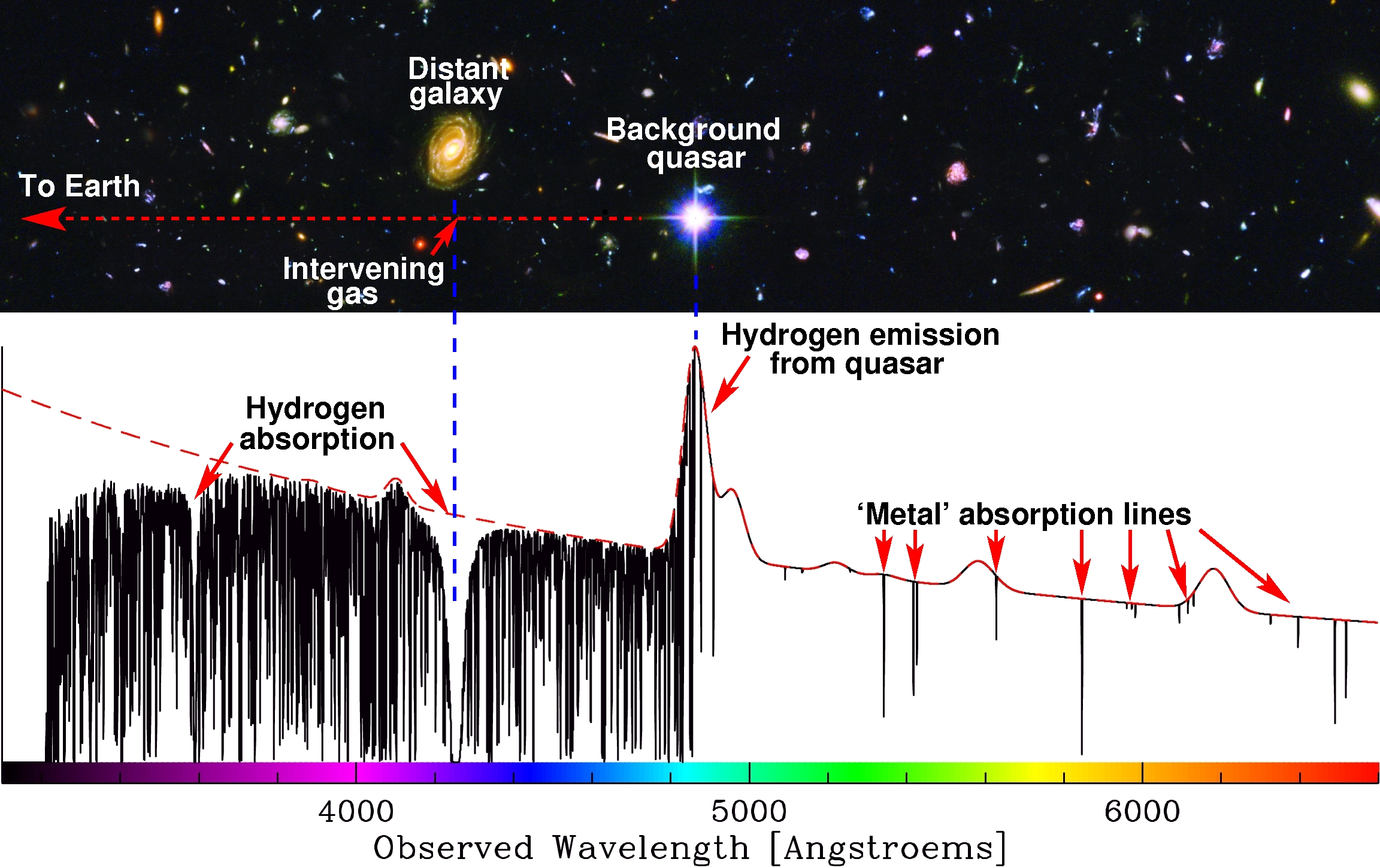
The intimate relationship of the absorbing gas with the thermal, chemical and dynamical history of the Universe makes the study of QSO absorption lines a rich and important source of information for many aspects of modern cosmology.
My (past and present) collaborators on these projects include:
We have looked for the effects of dust in damped Lyman-alpha absorbers observed in the SDSS QSO survey. We find little evidence of dust in these high-redshift systems but we do find a hint that background QSOs may be gravitationally lensed by foreground damped Lyman-alpha absorbers.
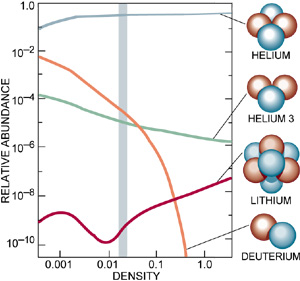 Observations of the high redshift deuterium abundance offer the most
promising way to measure the baryonic density parameter of the
Universe. However, reliable measurements are hard to derive, and after
several years of effort, only a small number of cosmologically useful
constraints exist. Moreover, these measurements show some trends which
may indicate that hidden systematics have influenced the measurements.
Observations of the high redshift deuterium abundance offer the most
promising way to measure the baryonic density parameter of the
Universe. However, reliable measurements are hard to derive, and after
several years of effort, only a small number of cosmologically useful
constraints exist. Moreover, these measurements show some trends which
may indicate that hidden systematics have influenced the measurements.
We are currently carrying out a large systematic survey of high redshift quasars to identify suitable objects to use for this measurement. The end result should be an unbiassed estimate of the number of baryons (protons, neutrons, etc) in the universe.
Using the same technique as in the large-scale structure project (below) we were able to show that the strength of the proximity effect depends on the intrinsic luminosity of the QSO. This result confirms the previously held assumption that the proximity effect is caused by the extra ionizing radiation from the QSO itself.
However, we could find only little evidence for the existence of the foreground proximity effect. This indicates that QSOs do not radiate isotropically (the same in all directions).
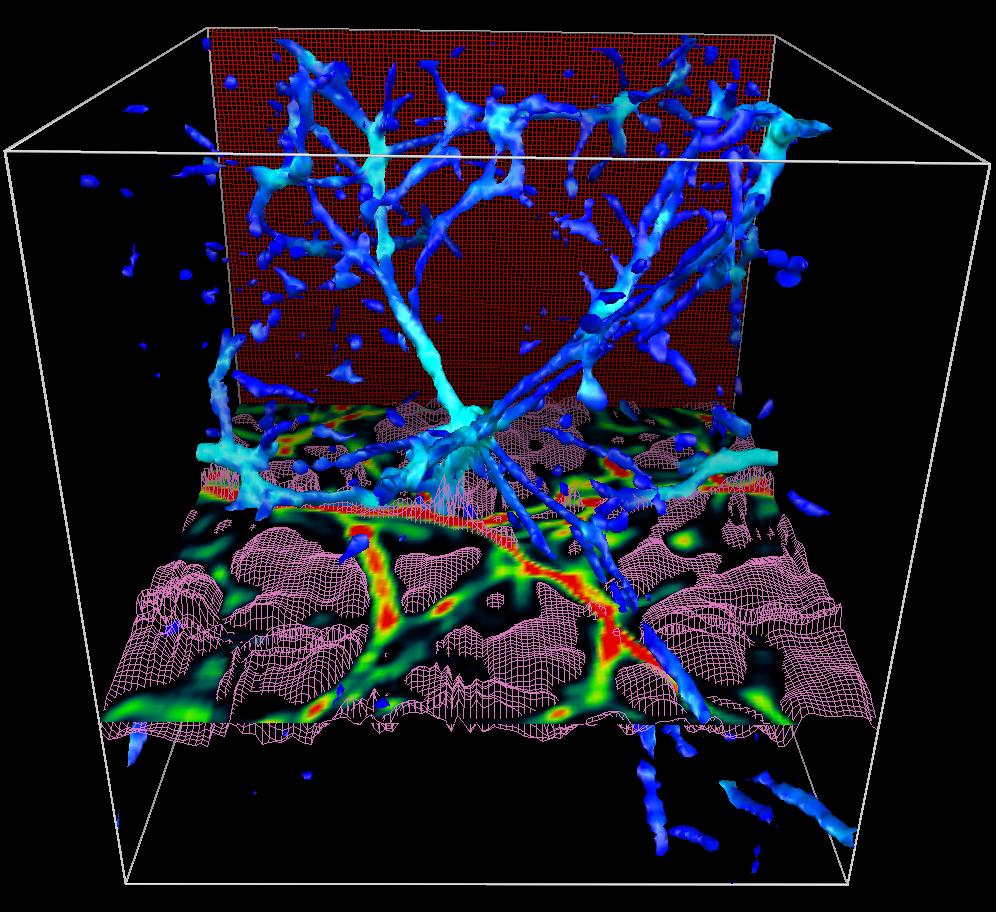 According to Cold Dark Matter models of large-scale structure
formation the Intergalactic Medium at high redshift, observed as QSO
absorption lines, is the remnant of the gravitational processes which
formed the filamentary and sheet-like structures which are so striking in
galaxy redshift surveys, such as the 2dFGRS.
We have developed a new method to search for large-scale overdensities
and underdensities in Lyman-alpha forest absorption spectra. We have
applied this technique to the spectra of close group of 10 QSOs and
found significant overdensities both along the line of sight and in
the plane of the sky. Some of these structures are very large and cannot
be traced by any other method.
According to Cold Dark Matter models of large-scale structure
formation the Intergalactic Medium at high redshift, observed as QSO
absorption lines, is the remnant of the gravitational processes which
formed the filamentary and sheet-like structures which are so striking in
galaxy redshift surveys, such as the 2dFGRS.
We have developed a new method to search for large-scale overdensities
and underdensities in Lyman-alpha forest absorption spectra. We have
applied this technique to the spectra of close group of 10 QSOs and
found significant overdensities both along the line of sight and in
the plane of the sky. Some of these structures are very large and cannot
be traced by any other method.
